If you can hear your toilet hissing, trickling, or refilling long after you’ve flushed, you’re not imagining it—and you’re not alone. A toilet that is constantly running is one of the most common plumbing problems homeowners face.
Beyond being annoying, a running toilet can:
- Waste hundreds of gallons of water a day
- Add a surprising amount to your water bill
- Put extra stress on your plumbing system
The good news: most causes are straightforward once you understand how the parts inside the tank work. In many cases you can diagnose the issue yourself, handle simple fixes, and know clearly when it’s time to bring in a professional plumber and submit a service request.

How a Toilet Is Supposed to Work
Before you can fix a running toilet, it helps to know the normal cycle.
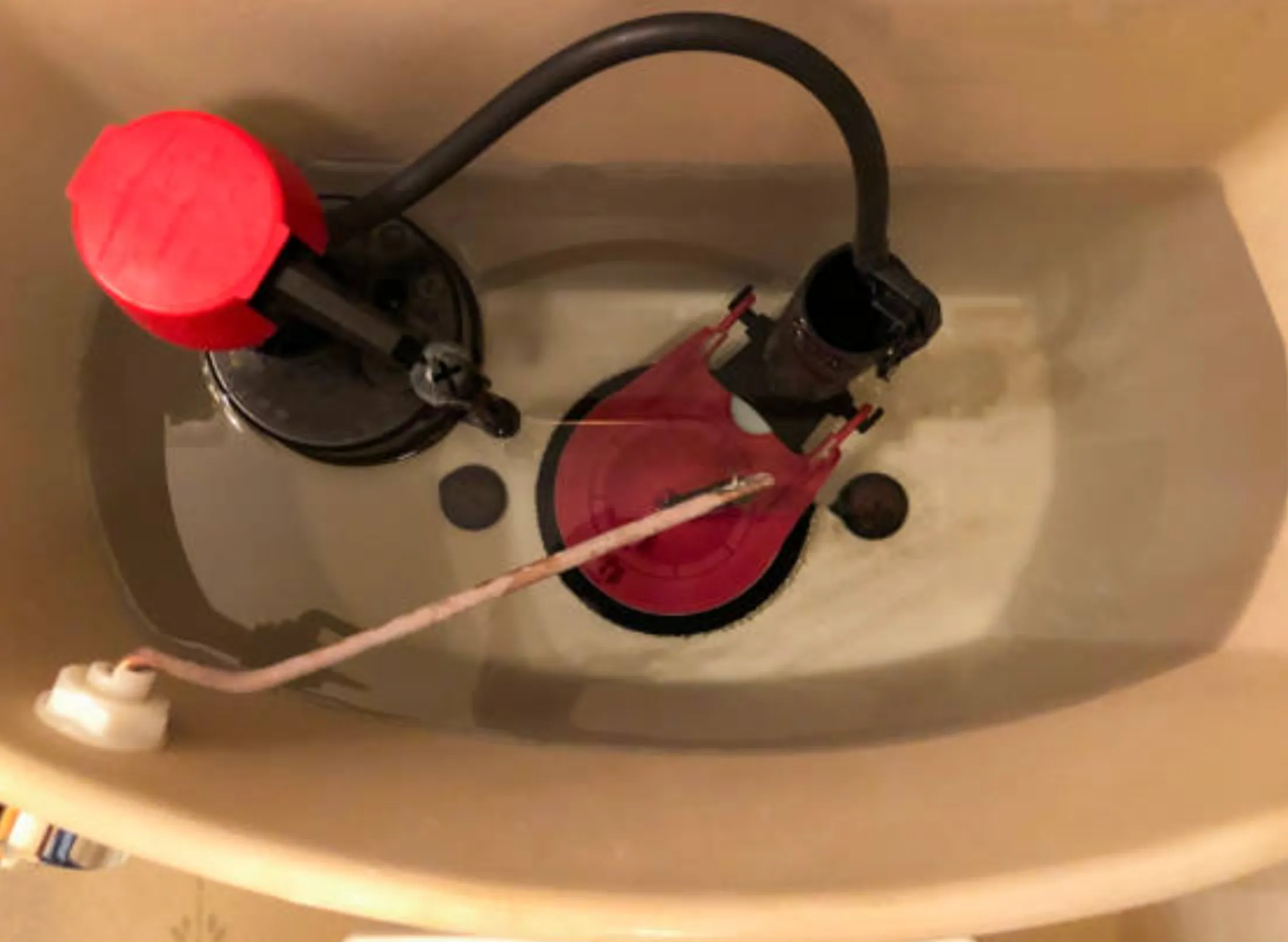
Inside the tank, you’ll typically find:
- Fill valve – The vertical assembly (often on the left side) that lets water into the tank.
- Float – A buoyant device (ball, cup, or integrated with the fill valve) that rises and falls with the water level.
- Flapper – A rubber or silicone valve at the bottom of the tank that lifts when you flush and seals when the tank refills.
- Flush valve seat – The hard plastic ring the flapper seals against.
- Overflow tube – The vertical tube in the middle of the tank that prevents overfilling.
- Refill tube – A small, flexible tube that refills the bowl via the overflow tube after a flush.
Normal Flush Cycle (30–60 seconds)
-
You press the handle.
The handle lifts the flapper via a chain or lever. -
Flapper lifts.
Water rushes from the tank into the bowl, creating the flush. -
Flapper drops.
Once the tank empties to a certain level, the flapper falls back down and seals. -
Fill valve opens.
As the water level drops, the float falls, opening the fill valve and letting in fresh water. -
Tank refills and stops.
When the water reaches the set level, the float shuts the fill valve off. Everything goes quiet.
If any part of that system leaks or misbehaves—especially the flapper, float, or fill valve—your toilet may keep running.
Common Symptoms of a Running Toilet
Here’s how a running toilet often shows up:
- Constant hissing or trickling sound from the tank
- Tank refills on its own every few minutes
- Water ripples in the bowl even when nobody flushed
- Handle feels “loose” or must be jiggled to stop running
- Higher than usual water bill without other explanation
These clues help you narrow down which component is failing.
Before You Start: Basic Safety & Tools
You don’t need to be a plumber to do basic diagnostics, but you should be methodical.
Shut-off Valve
Behind or near the base of the toilet, you’ll see a shut-off valve on the water supply line.
- Turn it clockwise to close (off).
- Turn it counterclockwise to open (on).
For most diagnostics, you’ll leave it on, but if anything goes wrong or you see water rising dangerously, you must know where this is and how to close it quickly.
Handy Tools & Materials
- Old towel or rag
- Small bucket (optional)
- Adjustable wrench or pliers
- Replacement flapper (universal or brand-specific)
- Replacement fill valve kit (if needed)
- Scissors or utility knife (for trim adjustments)
- Rubber gloves (optional but useful)
The 5 Most Common Causes of a Constantly Running Toilet
Most running toilets come down to one (or a combination) of these problems:
- Worn or misaligned flapper
- Water level set too high / faulty fill valve
- Faulty float or float adjustment
- Refill tube siphoning water
- Leaks at the flush valve seat or tank components
We’ll walk through each one in practical detail.
1. Worn or Misaligned Flapper
The flapper is the rubber piece at the bottom of the tank that lifts when you flush and seals to hold water in the tank the rest of the time. Over time, it can:
- Warp
- Crack
- Harden
- Get coated with mineral deposits
Symptoms
- Toilet runs every few minutes as the tank refills itself.
- You may hear a “ghost flush” even when nobody touched the toilet.
- Jiggle the handle and the running sometimes stops for a while.
What’s Actually Happening
If the flapper isn’t sealing tightly against the flush valve seat, water slowly leaks from the tank into the bowl. As the water level drops, the float falls slightly, triggering the fill valve to add more water. Repeat forever.
How to Test the Flapper
- Remove the tank lid and set it somewhere safe.
- Observe the water level. Is the toilet refilling itself every few minutes?
- Food coloring test (simple and effective):
- Put 10–15 drops of food coloring into the tank (not the bowl).
- Wait 15–30 minutes without flushing.
- If colored water appears in the bowl, water is leaking past the flapper.
How to Fix or Replace the Flapper
- Turn off the water at the shut-off valve.
- Flush the toilet and hold the handle down to drain most of the water from the tank.
- Remove the old flapper:
- Unhook the chain from the handle lever.
- Detach the flapper ears from the posts on the overflow tube (or slide off the ring, depending on design).
- Inspect the flush valve seat.
- Wipe it clean with a cloth or non-scratch pad.
- Remove any mineral buildup that could prevent a good seal.
- Install the new flapper:
- Attach it to the overflow tube as directed (ears or ring).
- Connect the chain to the handle lever leaving a slight slack—enough that the flapper can fully close but still lift cleanly.
- Turn water back on and let the tank refill.
- Test the flush several times:
- Make sure the flapper opens fully when you flush.
- Confirm it drops neatly onto the seat and seals.
If the running stops after this, you’ve solved the most common cause of a constantly running toilet.
2. Water Level Too High or a Faulty Fill Valve
Your toilet tank should fill to a specific level—usually marked on the inside of the tank or on the overflow tube. If the water level is too high, it spills slowly into the overflow tube, which sends water straight into the bowl. The fill valve senses the drop and keeps adding more water.
Symptoms
- Continuous trickling sound from the tank
- Water visibly flowing into the overflow tube
- Water level in the tank right at the top of the overflow tube
Step 1: Adjust the Water Level
Most modern toilets have one of two systems:
-
Float cup on the fill valve
- There’s usually an adjustment screw or a sliding clip on the fill valve shaft.
- Turn the screw or move the clip to lower the float, which lowers the water level.
-
Old-style float ball on a metal rod
- Gently bend the rod downward so the float shuts the water off at a lower level.
Aim for the water level to be:
- About 1 inch (2–3 cm) below the top of the overflow tube, or
- At the marked “water line” inside the tank.
Flush, let it refill, and see if water still spills into the overflow.
Step 2: Replace a Faulty Fill Valve (If Needed)
If the water level keeps creeping up even after adjusting the float, the fill valve may be worn out.
Basic replacement steps:
- Turn off the water at the shut-off valve.
- Flush and hold the handle to empty most of the tank.
- Use a towel or sponge to remove the remaining water from the tank bottom.
- Under the tank, disconnect the water supply line from the fill valve (use an adjustable wrench).
- Loosen the plastic nut holding the fill valve in place from underneath.
- Lift the old fill valve out from inside the tank.
- Install the new fill valve according to the manufacturer’s instructions:
- Adjust height so the water line will be at the correct mark.
- Tighten the nut from below (hand tight, then slight wrench snug—do not over-tighten and crack the tank).
- Reconnect the water supply line.
- Attach the refill tube to the overflow tube correctly (more on that below).
- Turn water back on, check for leaks, and adjust water level as needed.
If you’re uncomfortable dealing with the bottom of the tank and supply line, this is a good point to submit a contact request and have a licensed plumber handle the replacement.
3. Faulty Float or Incorrect Float Adjustment
The float controls when the fill valve turns off. If the float:
- Is waterlogged (on older float balls)
- Sticks against the tank wall or other parts
- Is set too high
…the fill valve may never fully shut off, leaving your toilet constantly running.
Quick Checks
- Move the float up and down by hand. It should move freely.
- If the float ball has water inside, it’s failing and needs replacement.
- Check that the float arm isn’t bent or rubbing against anything.
Fixing Float Issues
- Adjust the float position so the water level stops at the correct line.
- Replace a damaged float:
- For float-ball style, you can often unscrew the ball and screw on a new one.
- For float-cup or integrated floats, replacement usually means replacing the entire fill valve assembly.
If the float is fine but the fill valve continues to run, the valve mechanism itself is worn, and a full fill valve replacement (as above) is the correct fix.
4. Refill Tube Siphoning Water
The refill tube sends a small stream of water into the overflow tube to refill the bowl after a flush. If this tube is shoved too far down the overflow tube, it can act like a siphon.
Symptoms
- Mild but constant trickling sound
- Water level in tank slowly dropping without visible leaks
- Refill tube visibly sticking deep into the overflow tube
Why This Causes a Running Toilet
If the refill tube is submerged inside the overflow tube, it can siphon water out of the tank down into the overflow continuously. The float senses the drop and opens the fill valve, and the cycle repeats.
Easy Fix
- Turn off the water for safety (optional but recommended).
- Locate the refill tube where it connects from the fill valve to the overflow tube.
- Make sure the tube is clipped above the top edge of the overflow tube or only extends a short distance inside, as specified by the manufacturer.
- Use the clip that came with the fill valve kit (or install one) to keep the tube in correct position.
- Turn water back on and watch a full flush cycle. There should be a small stream into the overflow during refill, but no ongoing siphon.
This is a fast, simple fix that can eliminate subtle, persistent running issues.
5. Leaks at the Flush Valve Seat or Other Tank Components
If you’ve replaced the flapper and adjusted the fill valve, but your toilet still runs or refills itself periodically, you may have:
- A damaged flush valve seat (the hard ring under the flapper)
- Worn tank-to-bowl gasket
- Leaky tank bolts or washers
These issues can be more involved and often justify bringing in a professional.
Symptoms
- Food coloring test shows leakage into the bowl even with a new flapper
- Seepage around the bolts between tank and bowl
- Slight wobble of the tank on the bowl
- Persistent slow refill cycles
What’s Involved in the Repair
Fixing these problems typically means:
- Turning off water and draining the tank
- Disconnecting the water supply line
- Removing the tank from the bowl (unscrewing tank bolts)
- Replacing the flush valve assembly, tank-to-bowl gasket, and/or tank bolts and washers
- Re-seating the tank carefully and re-tightening to the correct tension
This work is doable for an experienced DIYer, but many homeowners prefer to request service since:
- The porcelain can crack if bolts are overtightened.
- Misalignment can lead to new leaks and wobble.
- You may need specific brand-compatible parts.
If your toilet is older or you’re seeing multiple signs of wear, this is where a licensed plumber can save you time, hassle, and repeat work.
Less Common but Real Causes of a Running Toilet

While the five issues above cover most cases, a constantly running toilet may also be caused by:
1. Cracked Overflow Tube
If the overflow tube itself is cracked or broken below the water line, water will leak into it even when everything else is fine. This generally requires replacing the entire flush valve assembly.
2. High Water Pressure
Excessively high home water pressure can:
- Force fill valves to leak
- Cause intermittent running or noise in the tank
If multiple fixtures in your home are noisy or acting strangely, a plumber can test your water pressure and recommend a regulator if needed.
3. Faulty Handle or Chain Issues
If the handle sticks or the chain is too tight:
- The flapper may not fully close.
- The toilet may keep running until you manually jiggle the handle.
Fixing this is usually as simple as:
- Adjusting chain length so there’s a bit of slack
- Ensuring the handle moves freely and springs back
- Tightening or replacing a loose or corroded handle
DIY vs. Professional Help: A Simple Decision Guide
You don’t need to call a plumber for every running toilet, but you also don’t need to fight with a stubborn problem for days.
Good Candidates for DIY
You can confidently try these steps if you’re reasonably handy:
- Adjusting the float and water level
- Repositioning the refill tube
- Replacing a worn flapper
- Tightening a loose handle or adjusting the chain
These are low-risk, low-cost, and often solve the issue within an hour.
When to Submit a Service Request
It’s worth contacting a professional plumber when:
- You’ve replaced the flapper and adjusted the water level, but the toilet still runs.
- The tank is leaking around the bolts or where it meets the bowl.
- You suspect a cracked flush valve or overflow tube.
- The shut-off valve is stuck, corroded, or leaking.
- You’re uncomfortable removing the tank or dealing with the supply line.
- You have multiple toilets or fixtures showing problems at once.
A licensed plumber can diagnose systemic issues (pressure problems, aged piping, etc.) and provide options that balance cost, reliability, and long-term performance.
Cost of Ignoring a Running Toilet

A running toilet is basically a slow, silent leak. Over weeks or months, it adds up:
- A moderately running toilet can waste hundreds of gallons per day.
- Over a month, that’s thousands of gallons—and a noticeable increase on your water bill.
- Many municipalities charge based on water usage and sometimes sewer estimates, so you’re effectively paying twice for water you never used.
When you compare the cost of a simple repair—or a service call—to months of higher bills, fixing a running toilet is almost always the better financial decision.
Practical Tips to Diagnose Your Running Toilet Today
If your toilet is constantly running, here’s a concrete, step-by-step approach:
- Lift the tank lid and observe while the toilet is running.
- Look for water flowing into the overflow tube.
- If yes → Lower the float / adjust water level.
- Perform a food-coloring test to check for a flapper leak.
- If colored water appears in the bowl → Replace the flapper.
- Check the refill tube position.
- Make sure it’s clipped above or just at the top of the overflow, not shoved deep inside.
- Inspect the float.
- Make sure it isn’t waterlogged or rubbing against anything.
- Listen for intermittent refills even after adjustments.
- If the toilet still refills itself periodically and you’ve addressed the basics, suspect valve seat, overflow tube, or tank gasket issues and consider calling a plumber.
If at any step you feel out of your depth—or you simply prefer guaranteed results without trial-and-error—submit a contact request to a reputable local plumbing company and describe what you’ve already tried. This helps them diagnose faster and often resolve the problem in a single visit.
Best Practices to Keep Your Toilet Running Right (Not Constantly)
To reduce the chances of dealing with a persistently running toilet in the future, follow these best practices:
1. Avoid “Tank Additives”
Drop-in toilet tank cleaners (blue tablets, etc.) can:
- Degrade rubber parts like flappers and seals
- Cause premature failure of fill valves
Use bowl cleaners designed for the bowl, not for constant contact with tank internals.
2. Inspect Internals Once or Twice a Year
Every 6–12 months:
- Remove the tank lid and check the flapper condition.
- Confirm the water level is at or just below the water line mark.
- Make sure the refill tube is correctly positioned.
This quick inspection takes a couple of minutes and can catch small issues before they become large water wasters.
3. Replace Parts Before They Fail Completely
If you notice:
- Flapper beginning to warp or stiffen
- Float starting to stick
- Fill valve becoming noisy or slow
It’s cheaper and easier to replace parts early than to wait until you have a full-blown running toilet problem.
4. Know Your Shut-Off Valve
Make sure everyone in the household knows:
- Where the toilet shut-off valve is
- Which way to turn it to shut off water
This is critical if the toilet ever overflows or you notice a sudden leak.
5. Use Quality Replacement Parts
While ultra-budget parts may seem appealing, they:
- Often fail sooner
- May not seal as well
- Can be more prone to adjustment issues
Choose reputable brands that match your toilet, or have a professional plumber supply and install parts they trust.
6. Don’t Ignore Early Warning Signs
If you:
- Hear an occasional “phantom” refill
- Notice rippling water in the bowl
- See your water bill tick upward without explanation
Treat these as early warnings. A small adjustment or cheap part now can prevent months of wasted water and higher bills.
Final Thoughts
A toilet that’s constantly running isn’t just a nuisance—it’s a mechanical problem with very specific, fixable causes. Once you understand how the flapper, fill valve, float, and overflow system work together, the mystery disappears.
In many cases, you can:
- Identify the problem
- Make small adjustments
- Replace simple parts like flappers and floats
And restore your toilet to a quiet, efficient fixture.
When the problem involves deeper components—flush valve seats, tank-to-bowl gaskets, aging shut-off valves—or you simply don’t want to risk cracking porcelain or dealing with surprise leaks, that’s the right time to submit a contact request to a licensed plumber.
Addressing a running toilet quickly:
- Saves water
- Lowers your utility bill
- Protects your plumbing system
- Keeps your bathroom quiet and stress-free
Take ten minutes today to lift the tank lid, run through the checks in this guide, and either fix the issue or schedule professional help. Your future self—and your water bill—will be glad you did.
